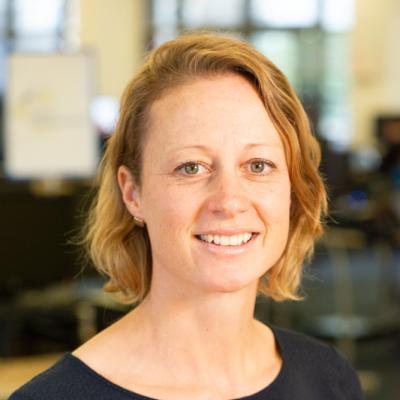
Anna Gawn
Anna joined SDDirect’s technical team in August 2022 and is a Principal Consultant in the Safeguarding Portfoilo.
Social Development Direct are market leaders in providing safeguarding technical services.
We have experience working with diverse clients, from development finance institutions and private sector companies to UN agencies and NGOs, universities, foundations and government bodies.
We are committed to helping organisations prevent and respond to exploitation, abuse, harassment and all forms of harm.
We are proud that the flagship Safeguarding Resource and Support Hub is part of our portfolio of work.
Safeguarding is about keeping staff, contractors, partners, clients and community members safe in humanitarian, development and peace settings. It means putting in place policies and procedures across organisations to prevent and respond to staff misconduct including sexual exploitation and abuse, sexual harassment or other harms such as bullying.
Uneven power dynamics - like those seen in the development and humanitarian aid sector, and in private sector supply chains – increase the risk of harm and exploitation. The more vulnerable staff and community members are, the more likely they are to be exploited, abused, harassed, or otherwise harmed. When organisations’ safeguarding measures fall short and misconduct occurs, projects, relationships and already made gains can be jeopardised and community tensions can increase.
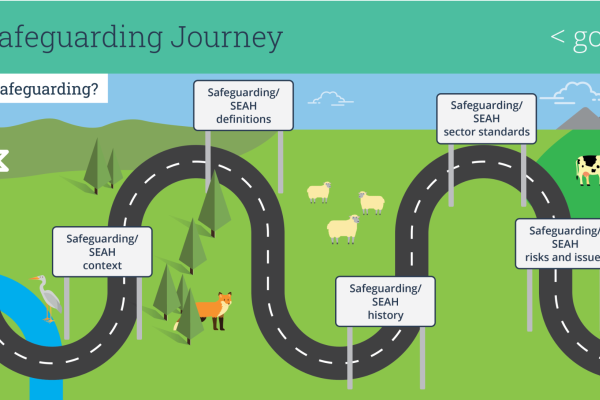
Our dedicated team of global safeguarding professionals ensure that our clients receive the highest level of technical advice and support. We start our work from wherever our client is on their safeguarding journey. We take the time to understand the organisation so we can provide support that is contextually relevant, responds to real needs and leads to success in safeguarding. We offer an explicitly intersectional feminist approach to safeguarding – in particular on the intersections of gender, race, sexual orientation, gender identity, and expression (SOGIE), and disability.
We can support you with:
Safeguarding policies, procedures, models and systems
Safeguarding knowledge building, including with tools, guidelines, training, and coaching on safeguarding.
Research and learning on what works in different contexts and for different organisations.
Incident case handling and investigation advice.
Monitoring, evaluation and learning of safeguarding efforts.
Safeguarding audits and self-assessment support. Click here to read more about our Safeguarding Framework for Organisations.
Mainstreaming safeguarding into existing or new programmes, consortia and sectors in development, humanitarian and peacekeeping settings.
Our thematic areas include:
Safeguarding against Sexual Exploitation Abuse and Harassment (SEAH)
Child safeguarding
Bullying and (non-sexual) harassment
Safeguarding in humanitarian contexts
Integrating safeguarding into high-risk projects
Digital safeguarding
Case handling and investigations
Safe research, monitoring and evaluation
We also conduct a lot of work to support organisations with their internal safeguarding policies and procedures. The outputs of these are often confidential. Here are a few examples of projects we’ve worked on recently:
Developed a global policy and Standard Operating Procedures on safeguarding for a bilateral donor.
Conducted an evaluation of a large international organisation’s safeguarding practices within human resources.
Conducted an audit of the safeguarding systems in place across different organisations working within a consortium in Ghana. Following the audit, we provided a range of technical tools and a series of trainings for consortia members on the core gaps identified in the audit.
Supported a bilateral donor’s head office to roll out safeguarding policy and procedures in country offices. We delivered a number of central guidance products including and supported three country offices with using of a diagnostic tool and develop an action plan and delivered training including on case management.
Provided technical advice to mainstream safeguarding into a range of large development programmes, including evaluations and climate programmes.
If you would like to hear more about our work on Safeguarding (SG), please reach out to Anna Gawn, Head of Safeguarding Portfolio, anna.gawn@sddirect.org.uk.
Anna joined SDDirect’s technical team in August 2022 and is a Principal Consultant in the Safeguarding Portfoilo.
As the international aid sector continues to make progress towards full realisation of the commitments made during the Safeguarding Summit in 2018, Official Development Assistance (ODA) organisations have made well-intentioned efforts to improve the prevention, mitigation and response to sexual exploitation abuse and harassment (SEAH)[1]. However, SEAH remains a scourge in the ODA sector[2].
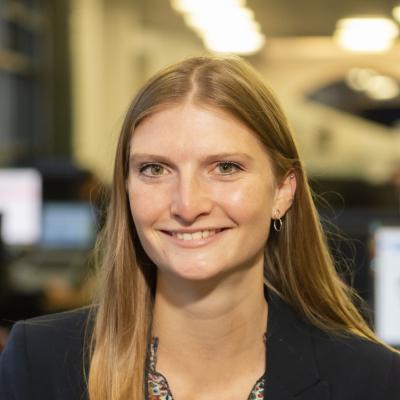
Inez joined SDDirect’s technical team in May 2022 and is a Senior Technical Specialist in the Safeguarding Portfolio.
During a previous international development assignment in a fragile and conflict-affected country (before I joined Social Development Direct), I was evacuated and lost my job because I am a queer woman. Someone had found out about my relationship with my partner and sent a letter threatening to report us both to the national government. They had sent the letter to my partner’s Country Director and demanded that her contract was terminated.
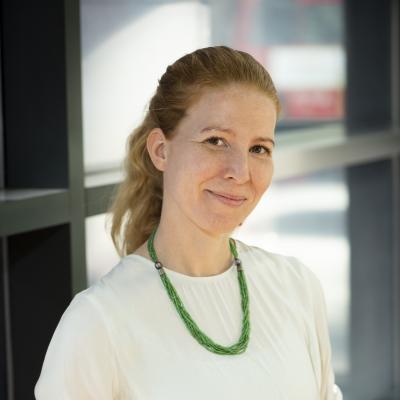
With a background in humanitarianism and social development, Hanna provides technical and research expertise to SDDirect’s Gender-Based Violence and Safeguarding portfolios.
Ann leads SDDirect’s work on safeguarding which includes work on protection from sexual exploitation and abuse (PSEA), child safe
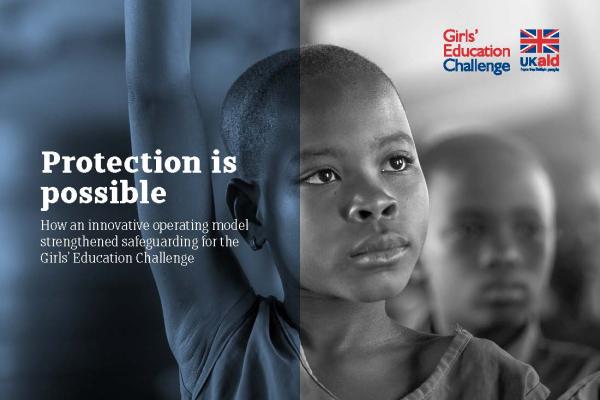
Developed as part of our work for the Girls' Education Challenge (GEC),this tool provides example questions for monitoring visits with a focus on policy and compliance.
Developed as part of our work for the Girls' Education Challenge (GEC), this tool provides example questions for monitoring visits and example focus group questions. The questions focus on culture, enabling environment and implementation.
Developed for the Girls' Education Challenge (GEC), this tool can be use in education settings, such as schools, based on observation only, and by specialists and non-specialists.
This tool can be used to conduct desk-based monitoring over the phone with staff members of a project.